
Shedding light on 'border blindness'

In the Crocus Project we have been examining the development of cross-border cultural and creative tourism in rural and remote areas. As in many previous projects, the basic approach has been to combine teams located on different sides of the border to develop cross-border activities.
However, as a recent presentation to the University of the Greater Region (UniGR) -Center for Border Studies based at Trier University examined, the border often disappears in such projects. The Crocus Project is a case in point, where a focus on cross-border working has the near-miraculous effect of making the border disappear.
Crocus has 16 cross-border Living Labs (LL), which bring together stakeholders to discuss the development of new business models in cultural and creative tourism. The most frequent themes discussed in these fora are gastronomy and events, which reflects the emphasis of development models across Europe as a whole (Richards, 2026).
The interesting point is that these teams often work in parallel, rather than collaborating directly. They each conduct their own work on their side of the border, occasionally pausing to discuss progress with their homologues on the other side. What is usually missing from these discussions, however, is the role of the border itself. The artefact that separates, and at the same binds the two sides, is the missing piece in the development puzzle.
This might be seen as a case of ‘border blindness’ – the elephant in the room that is so obvious it becomes invisible. There are a number of potential reasons for this:
Geography – borders are often far from the centres of political power and decision making. They are rarely prioritized and often forgotten, as economic and cultural cul-de-sacs.
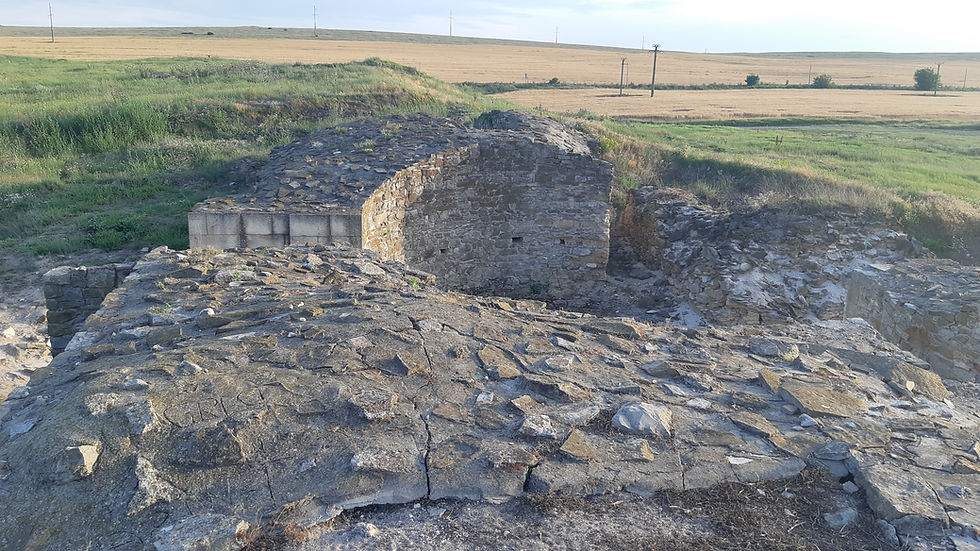
Politics – the opening of European borders under the Schengen Agreement turned actively controlled frontiers into ‘relict borders’ overnight. Now populist discourse is urging the re-instatement of borders, but in contrast with the Roman frontier, the border is reduced to a single line (or wall)
Psychology – to those living on the border, the presence of the frontier is such an existential reality that it becomes an underlying, and therefore submerged part of everyday life.
In Europe in particular we have become so used to the idea of open frontiers that we only notice them when relict borders are suddenly re-activated. This was the case with Covid, when free transit across borders was suddenly halted. It has also recently been highlighted by the border controls instigated by Italy in the wake of the Ceuta border crossings.
In such cases, the border becomes an event, a symbolic rather than a physical barrier. The political theatre of the border is performed by politicians when it is convenient and when it will deliver maximum media impact. This was the case of Boris Johnson’s speech about the ‘barbarians at the gate’ staged at the colosseum in Rome, when he suggested that when the Roman “empire could no longer control its borders, people came in from the East and all over the place and we went into a Dark Ages, or Europe went into a Dark Ages that lasted a very long time”. In such cases the border becomes a symbol for a much wider raft of political, social and cultural issues, in which the reality of the border itself is lost.
Border blindness is sometimes also evident in academic research. A recent study of a cross-border route in the Netherlands conducted extensive quantitative and qualitive research on route users, local residents and other stakeholders. They were asked a battery of questions about route use, facilities and attitudes, but nothing about the border itself. Had they crossed the border along the route? How did they feel about having crossed the border? Did they notice any differences? We don’t know, because no questions were asked about the border in this cross-border study. This is no exception. A study of residents attitudes to cross-border tourism in northern Portugal and neighbouring areas of Spain did at least compare people on both sides of the border, but there were no questions about the relationships of residents themselves to the border, about the border itself, or whether residents themselves crossed the border. A clear sign of border blindness, also among researchers trying to shed light on border issues….


Comments