
Reviving Europe’s borders: stimulating or inhibiting travel?

In a recent paper published as part of the Crocus Project we highlighted the changing rhetoric about borders in Europe. In the light of subsequent events in Ceuta and the use of these to inflame populist sentiments about migration, it seems that the dangers we flagged up regarding ‘re-bordering’ in Europe are becoming all too real.
After a long period of de-bordering following the Schengen agreement 40 years ago, there are now growing signs of European re-bordering in response to political pressures. As we highlighted in our research, right-wing rhetoric about threats from migration have changed the way borders in Europe are being represented. Schengen opened up ‘borderless’ travel, but now we see borders being re-activated across Europe.

Physical border checks have been reinstated on formerly ‘relict’ borders, such as that between Germany and the Netherlands, for example. Even though random controls do little to influence migration flows, they have led to a series of accidents on border motorways. A number of people have been seriously injured as a result. In spite of these problems, the German Interior Minister recently announced that the controls would be extended for a further six months. The Minister cited the “developments on the European exterior borders”, which “showed that stemming illegal migration means controls are still needed”. This is in spite of the fact that none of the migrants recently crossing into Ceuta have been admitted to the Spanish mainland or the Schengen Area.

An interesting paper by Winkelmolen, Garidou and van Houtum entitled “Waiting for Today’s Barbarians” explains how the Fall of the Roman Empire is being “Anachronistically Exploited” to serve populist agendas. Using the example of a speech by Boris Johnson, poignantly staged at the Coliseum in Rome, drew parallels with the Roman Empire to claim that uncontrolled migration would lead to a new Dark Ages in Europe:
“By forging a linear connection between the historical Roman Empire and today’s Europe (with which he means the border politics of the E.U.), Johnson suggests that the European countries would have to enforce similar border control or face catastrophic consequences. The Roman border is thereby systematically reduced to a fixed, protective, and delineating device, manifested as walls and fences and equated with the fences and barbed wires of the E.U. external border regime”.
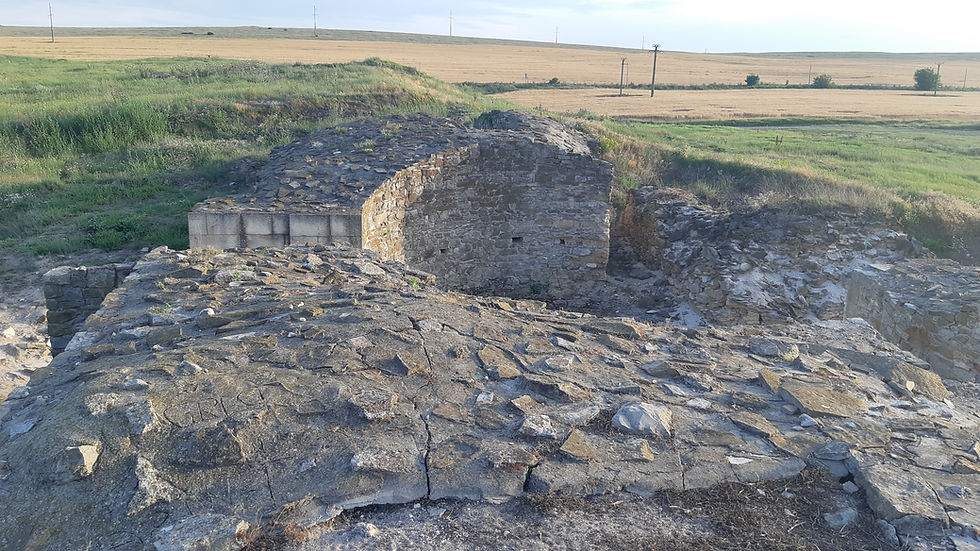
Johnson was not alone in pushing the neo-barbarian rhetoric – examples from Geert Wilders, Marine Le Pen and even Mark Rutte are cited in the article. In fact, as Winkelmolen et al. point out, the Roman border or ‘Limes’ was “not so much or only a harsh border(line) but an important and versatile zone of human and cultural interaction and exchange. In this inclusive borderscape, cultures, identities, forms of law and practices of power met, and could blend into new ones”.
The relatively porous border of the Roman Empire is therefore very different from the hard border being developed for the EU, which is also now re-instating internal borders as well. This re-bordering trend is worrying because it undermines the daily lives of those living in border regions and reduces the potential for the development of cross-border tourism: the main focus of the Crocus Project.
This underlines the paradoxical position of borders in the contemporary EU. At the same time that some are arguing that borders need to be strengthened, others are pointing to the potential for the ‘relict’ borders within the EU as tourist attractions. Our research shows that policymakers along former border areas are keen to highlight the historical value of the border, rather than resurrecting it.
Read more:
Greg Richards and Leontine Onderwater (2026) Developing cross-border cultural tourism: top-down vs bottom-up governance approaches.
Marek Więckowski (2025) Lines of memory. RELICT borders as footprints for tourism
Winkelmolen, L., Garidou, P. T., & van Houtum, H. (2025). Waiting for today’s barbarians: how the fall of the Roman Empire is anachronistically exploited to serve a contemporary discriminatory b/ordering and othering agenda.


Comments